


SEO? AEO? GEO? OMG!
You have a website. You want your ideal customers to find your website on Google. You knew you needed SEO for that, but now you’re being told you need AEO and GEO as well. WTF?
What do all these abbreviations mean and which ones do you actually need if you want people to find your website online?
Let’s break this down so we can make some sense of it and find you the answers you’re looking for.
What is SEO?
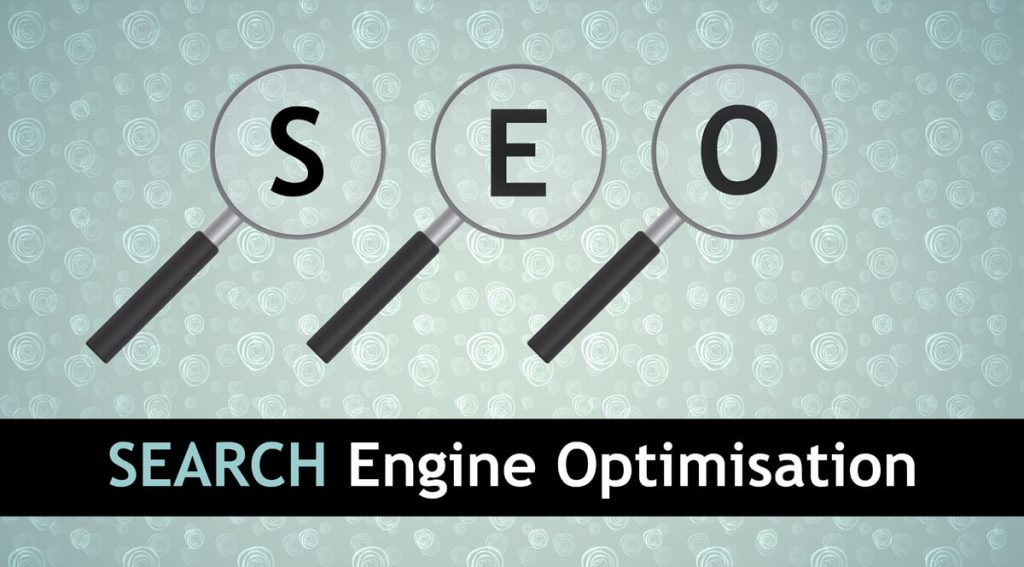
SEO is the OG. The original.
This is what I’ve been using since I started writing websites in 2007. No, you’re old.
It stands for Search Engine Optimisation and it’s about optimising your website for search engines, like Google. In plainer English, SEO covers a lot of important guidelines and techniques that make a website function at its best.
Good SEO means a website is:
- Helpful
- Accessible
- Fast-loading
- Well-written
- Mobile-friendly
- Safe and secure to use
- Easy for search engines to crawl.
If your site is well-optimised — using the right techniques and following the guidelines — it’s more likely to perform better on traditional Search Engines.
Examples of Search Engines
If you’ve been browsing online, you’ve almost certainly used one of these Search Engines:
- Microsoft Bing
- Duck Duck Go
- Yahoo Search.
How we optimise for Search Engines
With SEO, we’re optimising our content to rank in the traditional search engine results. Ideally in Google’s coveted #1 spot — or at least on Google’s first page. These things still exist in the era of AI-powered search, but they appear further down the page now we have the AI summary.
To make sure our pages are appearing for the right kinds of searches, we use SEO keywords, which mirror the words and phrases people are using to search on Google. The keywords we choose for each page must also be relevant to what our page is about and satisfy the intent of the people who are searching.
What is AEO?
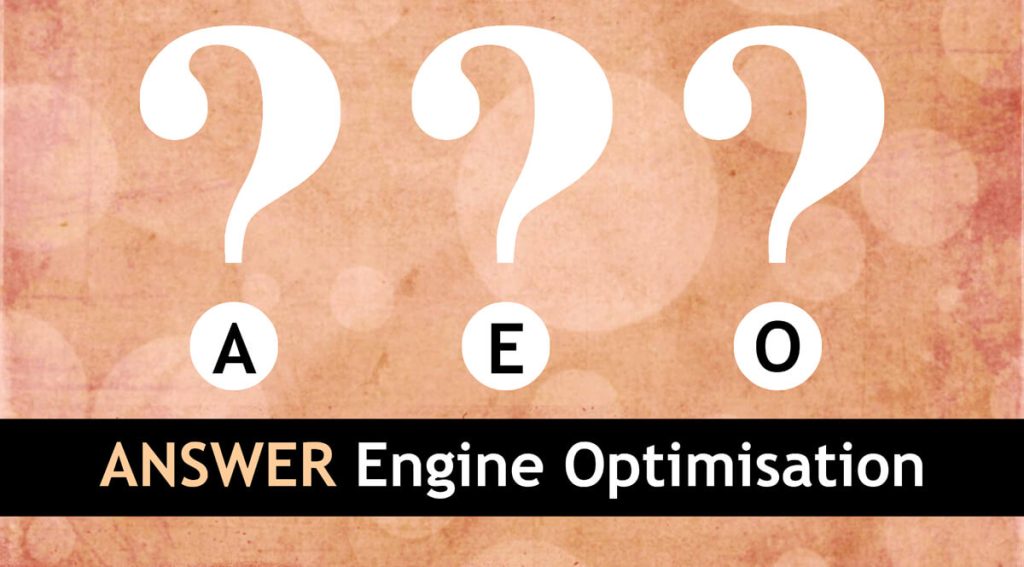
AEO is one of the new kids on the block — remember them? Hangin’ Tough? The Right Stuff?
I digress.
AEO stands for Answer Engine Optimisation and it’s an element of AI-powered search.
While Search Engines rank the pages that best answer your search query, Answer Engines give you a direct response to your search query.
Answer Engines look for the most expert, thorough, helpful, well-written and well-structured answer. When they find it, they’ll extract it and present it with a clickable credit to the site they found it on.
Some call this progressive. Most content creators call it theft. Because when the Answer Engine is answering a query directly, people don’t always need to go to your website. So, essentially, it’s stealing your content and stealing your clicks. I cover this in more detail in my article:
Is generic commodity content helping AI to steal your web traffic? >>
Anyhoo, when we optimise for Answer Engines, we’re aiming to be chosen as the best possible answer and be credited as the original source. Even if it might feel like shooting ourselves in the foot. Ouch.
Examples of Answer Engines
Answer Engines you may have heard of include:
- Perplexity
- ChatGPT Search
- Google AI Overviews
- Microsoft Copilot
- Google Gemini
- Voice Assistants, like Siri and Alexa.
How we optimise for Answer Engines
AI’s goal is to provide the best possible answers in the shortest possible time. To optimise for this, we need to make our content as quick and easy as possible for AI to scan and read.
This means using:
- The Q&A format with a succinct answer (under 45 words) followed by the full answer
- Processes in numbered steps
- List items in a bullet-point format
- Information nuggets like stats and data points
- Synonyms and related ideas that give broad topic coverage
- The SEO heading hierarchy
- Schema markup for structured data.
It’s also about standing out with unique and original, expert content rather than something more generic.
What is GEO?
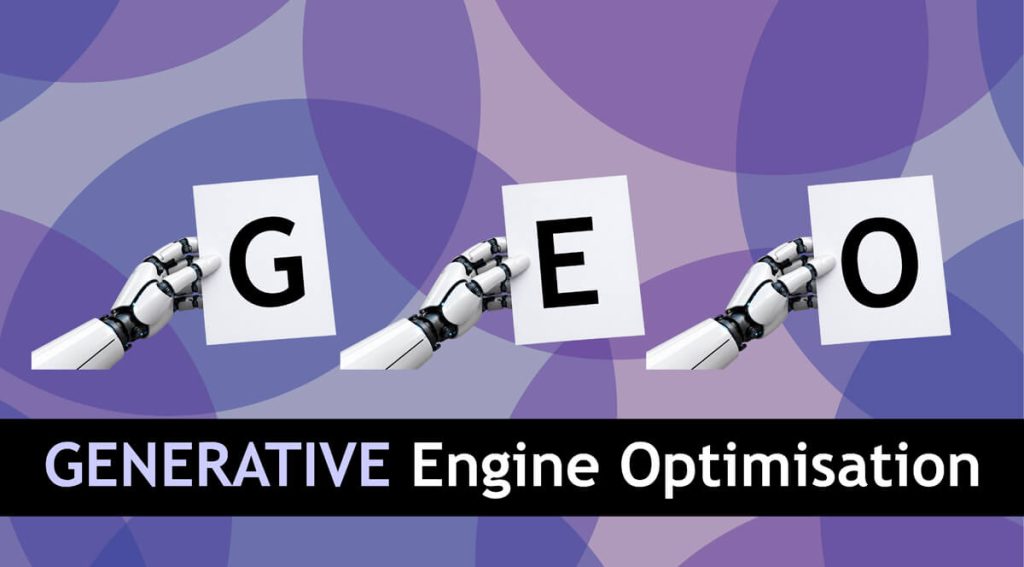
GEO stands for Generative Engine Optimisation and it’s another element of AI-powered search.
Generative Engines generate responses to search queries.
With a Generative Engine, there’s a chance the AI might summarise, recommend, or cite your brand’s content in its generated responses. And when we use GEO, it’s those mentions we’re aiming to get.
Examples of Generative Engines
Some of these are also Answer Engines:
- ChatGPT Open AI
- Google Gemini
- Perplexity
- Claude
- Microsoft Copilot.
How we optimise for Generative Engines
We’re still learning about Generative Engines, but word on the street is, they’re discerning.
They favour:
- Unique, original and authoritative content
- Hard data with statistical proof
- Links to reputable and credible sources
- Clear language and active voice
- Concise, information-packed paragraphs.
They also want to make sure you’re credible and will search for trust signals like off-site reviews and positive brand mentions across the web. This figures. If they’re going to become a trusted source of information, anything they’re recommending needs to be good.
What kind of engine optimisation does your business need to be found online?
Now you understand what the different kinds of engines are. But how do you know which ones you need for your business and where you should be investing your money?
Does the arrival of AEO and GEO mean SEO is finally dead?
Err… no. Sorry.

People have been saying SEO is dead for years — *eyeroll* — but it’s not true and never has been.
What’s actually been happening is that SEO has been evolving for this whole time. Improving the way we create websites and content to give internet users a better, more responsive and more intuitive experience.
It’s almost as if Google has been training the people who write SEO content for this new AI-powered era.
Don’t believe me? Look at this.
SEO evolved to include AEO
Although AEO is a relatively new thing, SEO content writers were prompted to start optimising our content with questions and answers from the late 2000s into the 2010s. This was known as the ‘They Ask, You Answer’ era. It’s when FAQ pages became popular and blog articles were often written in a Q&A style.
In 2015, the featured snippet was introduced. This was the prelude to the Answer Engine, giving a brief answer as a snippet at the top of the search engine results page (SERP). We optimised our content to be chosen for the snippet, giving a brief, snippet-worthy answer, then the more thorough answer for people to click through to.
It was 2023 when the first AI summaries were introduced. And the SEO content writers who’d been following the guidance were already well on their way to creating the kind of content Answer Engines were looking for. With the brief answer followed by the full answer in bite-sized chunks. Some people call this way of writing ‘chunking’ but, for many of us, it’s how we’ve always written for the web.
When this started to kill our clickthrough rates, SEO evolved to include GEO.
SEO also evolved to include GEO
The most lucrative way to be found using AI search is to be mentioned by a Generative Engine.
But how do we get those mentions?
By working hard on and off the website, just as SEOs have always done.
Optimising for Generative Engines on the website
With:
- Unique, expert-led articles
- Original research and ideas
- Hard data and statistics
- Credible research sources
- Authoritative, well-written content.
Optimising for Generative Engines off the website
With:
- Reviews on independent review sites
- Positive brand mentions across the web
- Backlinks posted on other websites.
AEO and GEO are still SEO
You don’t need separate AEO or GEO in your online strategy.
You just need an evolved SEO writer for the content and an evolved SEO for the technical side. They will take care of everything you need to get found using traditional and AI-powered search.
Hope that helps.
Do you need an evolved SEO content writer?
Hi, I’m Jenny. I’m an SEO copywriter and content strategist based in Leicester, UK. I’ve been creating content that works since 2007 and I’ve been evolving my process this whole time.
So if you need a content writer who can make you searchable in the era of AI, maybe I can help
You can find out more about me on my main website >>
Read more articles on my own blog >>
Or, if you’d like to discuss a project, get in touch >>

You might also like…